The Podcast Show 2026: Humanity, Hype and the Hard Questions We Can’t Dodge
Andrew Busby · 24 May 2026 · 4 min read
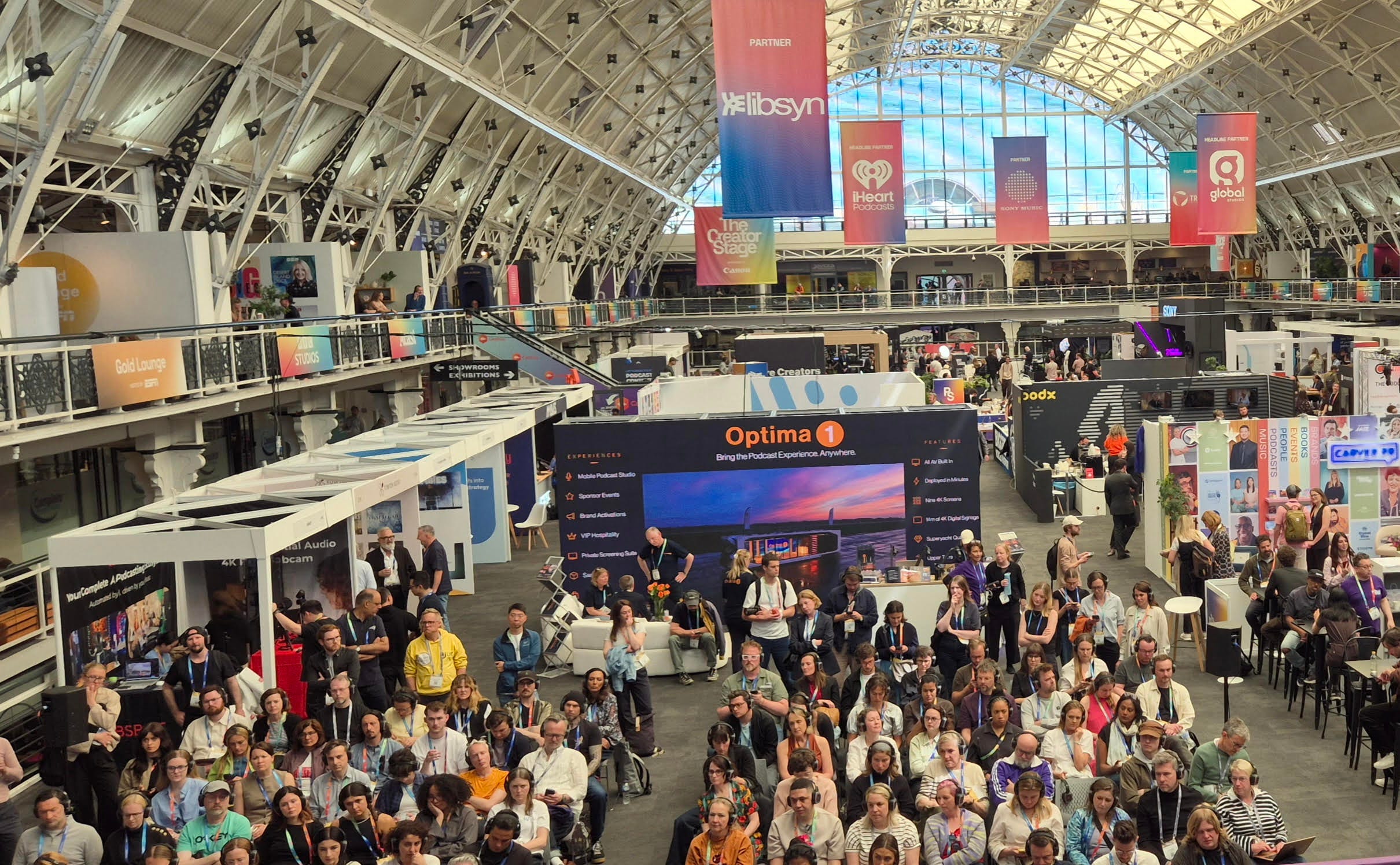
If you wanted a neat summary of The Podcast Show this year, you were in the wrong postcode. My first visit to the Show coincided with something far more revealing: a live collision between AI acceleration, creator reality, and an industry still trying to decide what it wants to be when it grows up.
Across three sessions, from AI‑generated hosts to Formula One superfans to decade‑long independents, one theme kept resurfacing: podcasting is no longer one thing. And that’s exactly why everyone’s nervous.
1. AI antipathy
The most combustible session came from the founder of Inception Point AI, Jeanine Wright, who walked into a room full of human producers and essentially said: We make 10,000 AI‑generated episodes a week. And audiences don’t care.
And it didn’t get any better.
Her argument was simple: there’s a vast “content desert” in audio, and AI can fill it faster, cheaper, and at a scale no human team could match. The BBC’s response was equally clear: just because you can doesn’t mean you should.
The BBC’s stance, cautious, regulated, transparent, was a reminder that public service media still sees itself as a steward, not a disruptor. They’re using synthetic voice only to reformat journalism, not to create new personalities. And they’re adamant that a podcast is a human connection, not just an audio file.
Jeanine’s counterpoint? Audiences suspend disbelief everywhere else, in gaming, reality TV, virtual influencers — so why should audio be sacred?
The tension wasn’t really about quality. It was about trust, identity, and who gets to define what a podcast is.
And when a healthcare professional stood up and asked her to commit publicly to removing misleading medical content, the room held its breath. She didn’t commit, not on stage, but she did acknowledge the responsibility. It was the closest thing the conference had to a moral showdown.
2. Meanwhile, in the real world: creators are still building brick by brick
If the AI panel was the future, the Formula One session was the present, human, and powered by chemistry you can’t automate.
Global’s Up To Speed team talked about casting like it was an art form: a former racer, a Drive to Survive star, a veteran commentator, and a Gen Z creator. Four perspectives, one show, and a studio built deliberately for YouTube first.
The numbers back it up: 10 million views in three months, driven by a layered strategy of long‑form, shorts, and relentless consistency.
What stood out wasn’t the polish, though the studio is undeniably slick, but the intentionality. Every choice was audience‑first. Every release was timed to the F1 calendar. Every short form was a lead in to the full episode.
And the fans? Vocal. Demanding and deeply invested.
This was the opposite of AI‑at‑scale. This was community‑building.
3. And then there are the independents - still proving everyone wrong
The third session brought us back to earth: two creators who built their shows the old‑fashioned way, with conviction, graft, and a willingness to look ridiculous on camera.
Edith Bowman’s Soundtracking is about to hit ten years. No network. No billboards. No shortcuts. Just a clear concept; conversations about music in film, and a refusal to dilute it.
Katie from Girls in Low Places told a different kind of origin story: heartbreak, a hen do in Nashville, a cancelled wedding, and a podcast that accidentally became a career. No influencer platform. No production budget. Just a sofa, a friend, and a belief that country music needed a female‑led voice in the UK.
Both made the same point: start before you’re ready. Episode one won’t be perfect. It shouldn’t be. The rough edges are part of the journey.
And both were honest about the emotional cost: the self‑critique, the “winter uglies”, the fear of letting an episode go. AI doesn’t feel any of that. Humans do.
4. So where does this leave us?
Somewhere uncomfortable - and that’s good.
AI isn’t going away. Human creators aren’t either. And the industry’s future won’t be decided by ideology but by audience behaviour, economics, and trust.
What The Podcast Show revealed is this:
AI will scale content.
Creators will deepen connection.
Platforms will shape discovery.
Audiences will decide what counts.
And the rest of us? We’ll have to get used to living in the grey zone, where innovation and integrity wrestle in real time.
Because podcasting isn’t one thing anymore.
It’s everything at once.