If Andy Burnham Wants To Save The High Street, The Template Lies Gathering Dust In Whitehall
Andrew Busby · 11 August 2026 · 4 min read
The year is 2011, Topshop have expanded into Toronto, Chicago, New York and Miami. Oddbins has gone into administration, MySpace is no more and sadly the same can be said of Steve Jobs.
It was also in December of that year that Mary Portas published her ‘Portas Review’, a report on the state of the high street, commissioned by the then Conservative and Liberal Democrat coalition of David Cameron and Nick Clegg.
It was eagerly anticipated, Mary had, if one recalls, made her name as a TV celebrity via several shows and monikers; ‘Mary Queen of Shops’ and her equally successful ‘Secret Shopper’ series.
The 2011 report set out her view on what had led to the decline of our high streets. It:
described her vision for the future to breathe economic and community life back into our high streets and town centres
made recommendations on how to deliver that vision by getting town centres to run like businesses and getting the basics right to allow businesses to flourish.
It contained 28 recommendations, including business rates reform, but ultimately failed because the government at the time used it as more of a PR exercise, relying on relatively small £100k pilot grants for the ‘Portas Pilot’ towns, rather than tackle the underlying challenges of business rates, the growth of online and out of town shopping centres. Sound familiar?
The Portas Review was followed by the Grimsey Review parts one and two, published in 2013 and 2018. Respected veteran retailer Bill Grimsey came to some similar conclusions which were also published in his book ‘Sold Out’.
However, at the time, he felt that the Portas Review hadn’t addressed the underlying issues, saying, “It was clear to me that Portas had failed to highlight to Government the dramatic structural changes impacting the retail industry through the convergence of changing consumer behaviour driven by technology and that brought about by the prevailing economic conditions”.
Instead, he argued that the retail-heavy high street was already finished and that the future lay in creating community-focused hubs.
However, its broad and, in some cases, radical recommendations were largely overlooked or rejected by the UK Government.
Fast forward to 2026, and new Prime Minister Andy Burnham has announced that he is working on a “10 year plan to bring back hope”, adding that town centres had been "hollowed out" by decades of decline and for many people, the high streets they grew up with are "unrecognisable".
The plans announced include:
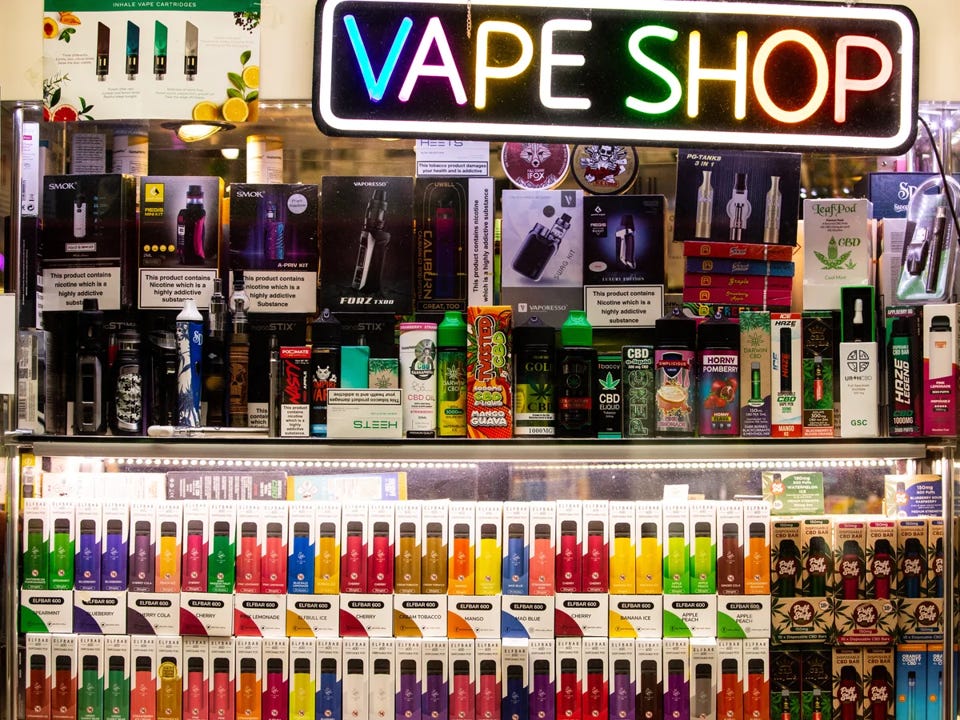
Changes to planning law which would mean every new shop selling e-cigarettes, or vapes, would need to apply to their local council for permission to open (England only)
Tightening the definition of a vape shop to prevent businesses avoiding the rules by describing themselves as a general convenience store or retailer (England only)
Scrapping a rule known as “aim to permit”, which currently restricts councils’ ability to refuse new betting shops and 24-hour slot machine shops (Great Britain-wide)
Requiring planning permission for new adult gaming centres, which offer 24-hour access to gambling machines (England only)
New powers to extend closure orders for mini-marts and vape shops found to be selling illegal tobacco or up to twelve months (England and Wales)
All laudable objectives and no doubt much-needed. But for those in the industry, the frustration is almost palpable.
At the time of the Portas Review in 2011, according to the Office for National Statistics (ONS), the percentage of retail sales which were attributed to online transactions amounted to 8.3%. In 2025, that number was 27.4%.
In the face of this competition, retailers’ costs continue to rise. The announcement by the government in January of this year of additional business rates support prompted this statement from British Retail Consortium CEO, Helen Dickinson:
“The Government recognises the rates system is not fit for purpose and promised to replace it in their manifesto. The Treasury is right to introduce short-term relief for those hit hardest by the rates rises, but this should be targeted at all those on the high street whose bills will see the biggest rises, whether they are pubs, shops or cafes. If rates rises are left unchecked, it will lead to fewer shops and fewer jobs right at the heart of our communities.
Today's announcement shows there is more to be done on rates reform and government must honour the promise of root-and-branch reform they made to the electorate at the 2024 election. Business rates have been increasing every year and we are now at tipping point. At £27bn in England alone, it is breaking the backs of businesses everywhere and must be brought down”
As both Mary Portas and Bill Grimsey stated, the high street decline is not a fundamental retail problem, it is a community issue.
Despite apparent differences, their motivations were similar and grounded in a deep understanding and affection for retail and the high street. It remains to be seen whether the ‘Burnham Review’ will take up the mantle of their legacy.
It shouldn’t be too difficult, after all, all he has to do is blow away a few cobwebs.